The SMBL /Powered by Graphene

Material science · Sun Hoodie

What the f#ck is graphene?

The short answer: the strongest material ever discovered. Here's why we put it in your hoodie.

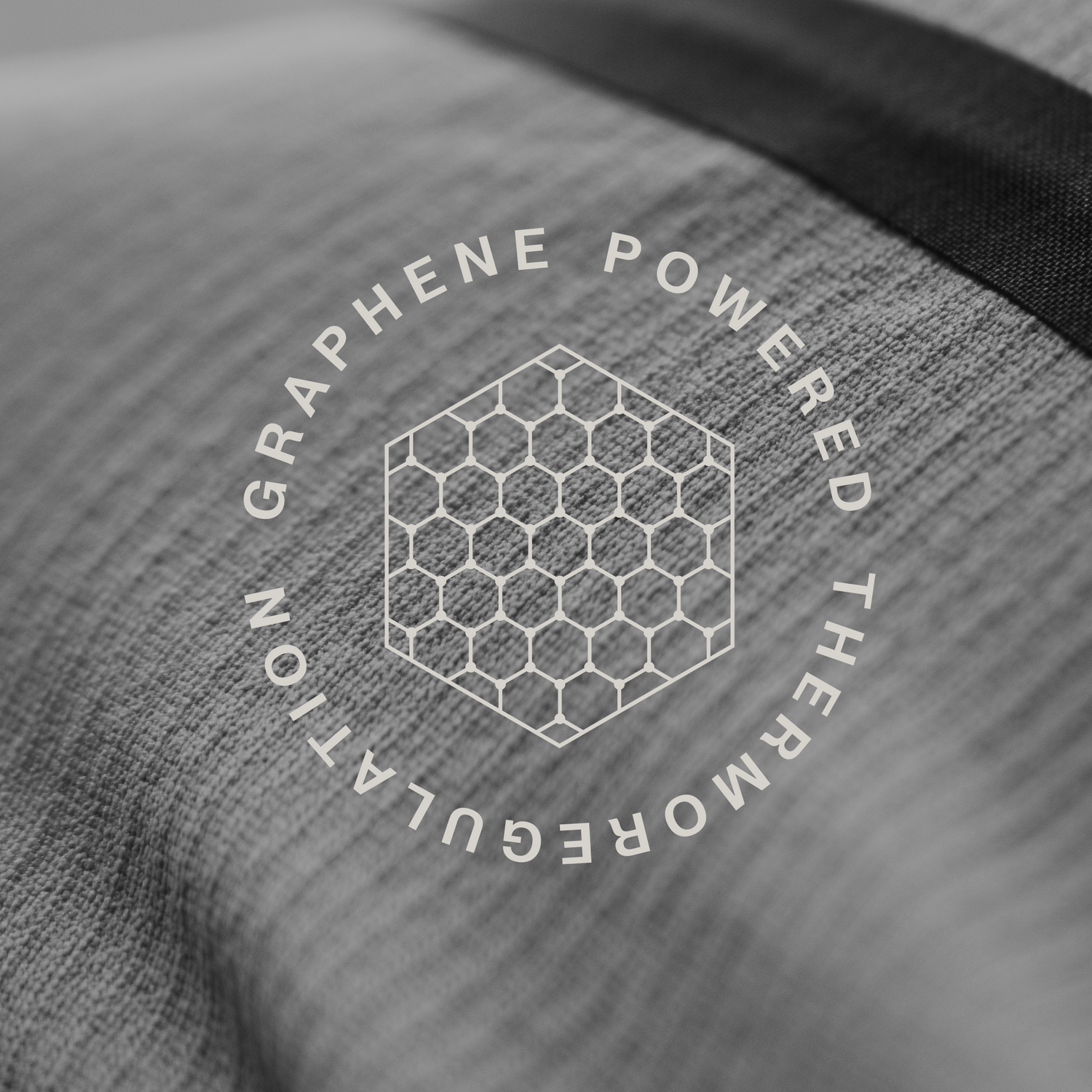
Graphene is a single layer of carbon atoms arranged in a hexagonal lattice. It was first isolated in 2004 by two scientists at the University of Manchester using scotch tape and a pencil. They won the Nobel Prize in Physics six years later. We use it to make your sun hoodie better in every measurable way.

200×
Stronger than steel
UPF 50
Won't wash out
1 atom
Thick. Lightest material known
0
Harmful coatings or sprays

The science

One layer of carbon. Every advantage.

Graphene is pure carbon — the same element as a pencil tip — arranged in a single-atom-thick sheet in a perfect hexagonal pattern. That structure is what gives it extraordinary properties that seem almost contradictory: it is simultaneously the strongest, lightest, most conductive, and most flexible material ever measured.

To give you a sense of scale: a graphene sheet one square meter in size weighs less than one milligram. Draped across a coffee cup, it could support the weight of a cat without breaking. It is optically transparent, chemically stable, and conducts heat and electricity better than copper.

It was theoretical for decades. Scientists knew it should exist. Getting it to exist was the hard part — and the reason two physicists won the Nobel Prize for peeling it off a graphite block with adhesive tape in 2004.

Why it matters in fabric

Four properties. All of them useful.

01
Strength
200× stronger than steel
Graphene-infused fibers are harder to break, stretch, and pill than standard fibers. The fabric holds its structure longer — seams stay seams, weave stays tight.
02
Thermoregulation
Cooler when hot. Warmer when cool.
Graphene conducts heat faster than any known material. In fabric, heat distributes evenly — reducing hot spots and regulating your skin temperature naturally.
03
Odor Resistance
No bacteria. No smell.
The hexagonal carbon structure is naturally antimicrobial. No silver treatments, no chemical finishes — just a material that stays fresh on its own.
04
UV Protection
UPF 50. Permanent.
Graphene absorbs and blocks ultraviolet radiation at the fiber level. It doesn't wash out because it's not a coating — it's fused into the yarn itself.

How it works

Not a coating. Not a spray. Fused.

The reason most technical fabrics lose their performance properties after washing is that those properties are applied on top of the fabric — sprayed on, coated on, finished on. Wash it enough and the surface goes.

Graphene infusion works differently. Graphene particles are integrated into the polymer during fiber manufacturing — before the yarn is spun, before the fabric is woven. The graphene becomes part of the fiber's molecular structure. It cannot wash out because it was never on the surface to begin with.

The result: UPF 50 protection, thermoregulation, and antimicrobial properties that are permanent — guaranteed for the life of the garment, not the life of a coating.

01
Graphene integrated into polymer
Before fiber is formed, graphene particles are mixed at the molecular level into the polymer base — not applied afterward.
02
Fiber spun with graphene inside
The yarn is extruded from the infused polymer. Graphene is now inside every fiber, not on its surface.
03
Fabric woven, garment sewn
Standard construction from here — but with a fundamentally different material at its core.
04
Performance is permanent
Wash it 500 times. The graphene doesn't move. Neither does the UPF 50 rating, the thermoregulation, or the odor resistance.
Graphene vs. standard UPF treatments
Standard UPF spray
Fades with washing
Chemical coating on surface
Loses protection over time
May contain harsh chemicals
No thermoregulation
No odor resistance
Graphene infused
Permanent — structural
Inside the fiber, not on it
UPF 50 for life of garment
No harmful chemicals
Active thermoregulation
Natural antimicrobial

What it actually does for you

The science in the field.

On the climb
You generate heat. It moves it.
Graphene's thermal conductivity distributes heat evenly across the fabric surface. You stay regulated — not damp, not overheated — through sustained effort.
In full sun
UPF 50 that doesn't wash out.
After one season of washing, most UPF garments operate at a fraction of their original rating. The Skyward's UPF 50 is the same on day one as it is on day five hundred.
Multi-day use
Wear it three days straight.
Graphene's hexagonal structure prevents bacterial colonization — the root cause of fabric odor. Wear the Skyward on consecutive days and it stays fresh. Actually fresh.
Into the wind
The chill doesn't stay.
When temperature drops, graphene reflects body heat back toward your skin. The same property that keeps you cool in high output keeps you from going cold on descents.
After years of use
Still performing.
The fabric holds its structure, its shape, and its technical properties longer than any coated alternative. This isn't a one-season garment. It's designed for a decade.
Chemical-free
No PFAS. No coatings.
Most technical fabric treatments rely on PFAS (forever chemicals) or chemical finishes against your skin. Graphene infusion requires neither. The performance is molecular.

Common questions

Things people actually ask.

Is it actually graphene, or is this just marketing?
It's actually graphene. The Skyward uses graphene-infused fiber, not graphene-coated fabric. Infusion means the graphene is part of the fiber's structure. Many brands claim graphene benefits from a surface application that washes off. Ours is different — and that's verifiable by the permanence of the UPF rating through washing.
Why don't more brands use graphene if it's so good?
Two reasons: cost and complexity. Graphene infusion at the fiber level requires more sophisticated manufacturing than surface application. Most brands optimize for margin. We optimized for permanent performance — and priced it at $129, which required making different tradeoffs elsewhere.
Does the UPF 50 rating actually last?
Yes — because it's structural, not applied. Standard UPF ratings are tested on new garments and degrade with washing. The Skyward's UPF protection is at the fiber level. Wash it 200 times and test it. The rating holds.
Is graphene safe to wear against skin?
Yes. Graphene in fiber form has no known health risks. The chemistry is inert. It is carbon — the same element in every organic compound in your body. The EU has conducted extensive safety assessments on graphene textiles with no adverse findings.
What's the difference between graphene and graphite?
Graphite is layers of graphene stacked on top of each other — like a ream of paper. Graphene is a single sheet. When you peel graphene from graphite, you get a material with properties that don't exist in the stacked form: transparency, flexibility, and extraordinary strength.

The product

The Skyward Sun Hoodie. Built with it.

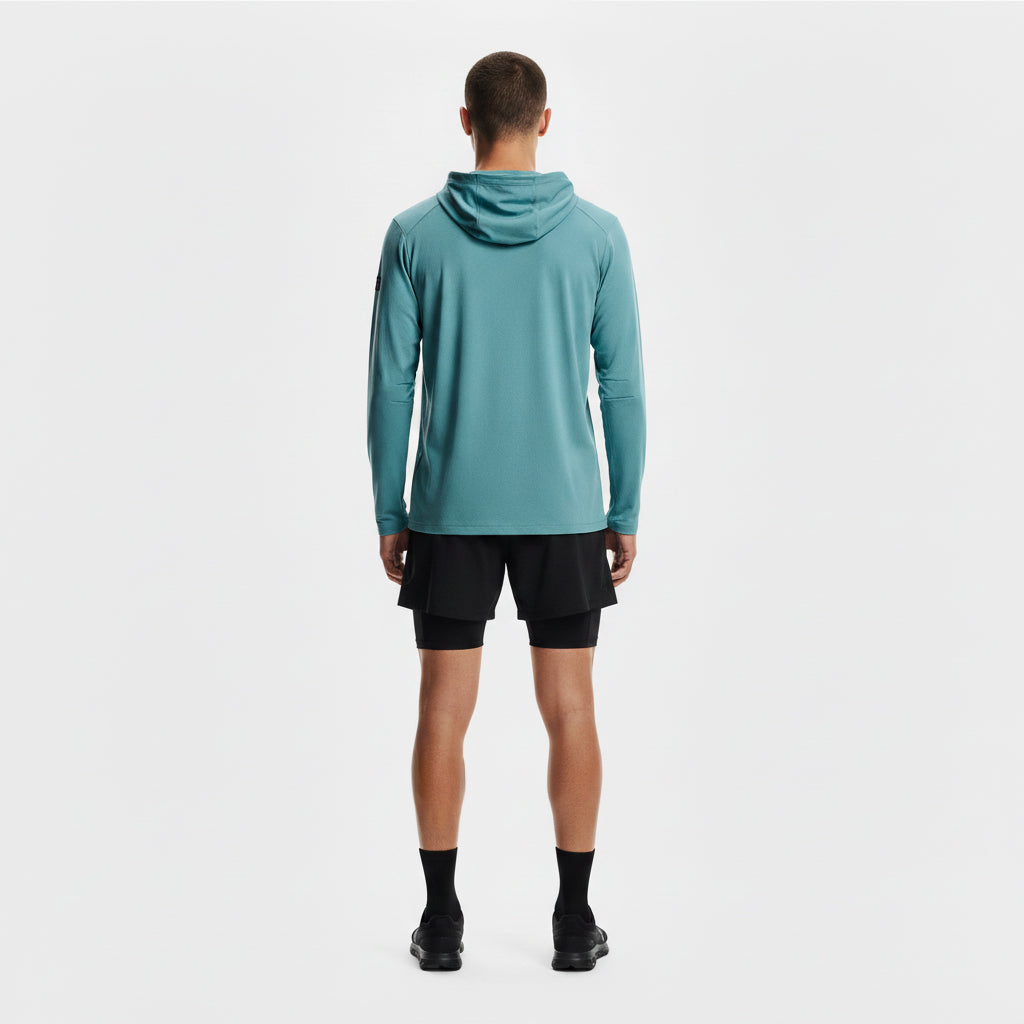
Everything on this page lives inside the Skyward. UPF 50 that won't wash out. Thermoregulation that works both directions. Natural odor resistance for multi-day use. A fabric that holds its structure for years. At $129, it's the last sun hoodie you'll need to buy.

SKYWARD SUN HOODIE
SKYWARD SUN HOODIE
Graphene-infused · UPF 50 permanent · thermoregulating · odor resistant · 3 colors
$129.00
Shop the Skyward Sun Hoodie →